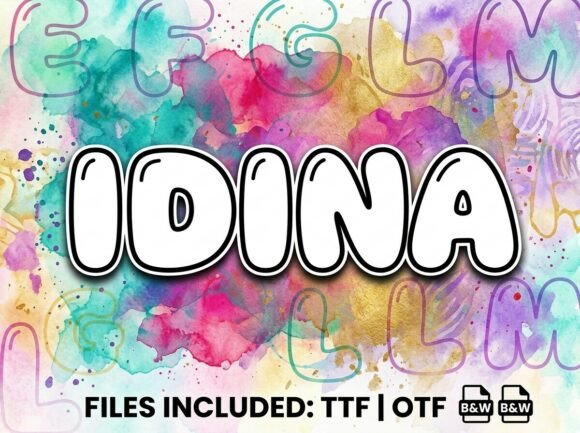
Idina Font: A Display Typeface That Demands Attention
I was knee-deep in redesigning a creative portfolio site for a client when I stumbled upon Idina. They wanted something that stood out—something with personality. As I tested various display fonts, Idina caught my eye with its artistic flair and commanding presence. It wasn’t just another font to throw into the mix; it felt like the missing piece of their brand identity.
First Impressions: Idina in a Hero Section
The first place I tried Idina was in the hero section of the portfolio homepage. The goal was to create an immediate emotional impact while maintaining clarity. On desktop, the font worked beautifully against a subtle gradient background. Its unique strokes and decorative elements added a sense of sophistication without feeling overdone.
But I had to test how it scaled down. When previewed on mobile, the character spacing remained legible even at smaller sizes. This is crucial for display fonts—many lose their charm or become unreadable when compressed. Idina kept its balance well, making it suitable for both large headlines and compact headers in responsive layouts.
Idina for Creative Branding and Editorial Layouts
I next considered using Idina as part of the client’s broader branding strategy. Their business centered around luxury wedding design, so the font needed to evoke elegance and exclusivity. I layered it over a high-quality image of a venue and adjusted the contrast to ensure readability. The result? A headline that felt curated, intentional, and perfectly aligned with their aesthetic.
In editorial contexts, such as blog headers or course sales pages, Idina can work wonders when used sparingly. I paired it with a clean sans serif body text to maintain a modern feel while letting the title command attention. This kind of font pairing is essential—it prevents the page from becoming visually overwhelming but still gives you the punchy style you’re after.
Using Idina for Boutique Online Stores and Product Landing Pages
Another project I was working on involved launching a boutique online store for a small jewelry brand. I knew they needed a visual hook, so I introduced Idina into the product landing page header. The font immediately elevated the tone of the site, turning a simple e-commerce layout into something more aspirational.
What I appreciated most about Idina in this context was how it helped establish a consistent brand identity. From the logo to the promotional banners, using the same typeface across key visuals made the site feel cohesive. And since it’s a display font, it works especially well for short phrases and taglines where impact matters more than long-form reading.
Idina on Buttons and Call-to-Action Elements
I did consider placing Idina on buttons and CTA areas, but quickly realized it might not be the best fit there. Decorative fonts like Idina are great for attracting attention, but they can hinder quick scanning if used in interactive elements. Instead, I reserved it for hero titles and feature headers, then switched to a simpler sans serif for buttons and links.
This approach ensured that users could easily find what they were looking for without being distracted by overly stylized typography. In web design, striking a balance between creativity and usability is everything—and Idina helps you do just that when placed thoughtfully.
Idina for Logo Design and Digital Brand Kits
One of the standout features of Idina is how well it performs in logo design. I used it for a digital brand kit overhaul for a wellness coaching website. The logo became a focal point instantly, and the uniqueness of the typeface gave the brand a memorable edge.
For this project, I checked the included styles and alternates to see if there was enough flexibility for variations like subheadings or signature blocks. While Idina is primarily a display font, having a few weight options allowed me to use it in different parts of the site without repeating the exact same style too often.
Readability Considerations Across Devices
When integrating Idina into a real project, I always take a moment to test it across devices. I’ve learned the hard way that a beautiful display font can fall flat if it doesn’t render cleanly on all screen sizes.
- Mobile screens: Use larger line heights and avoid tight letter spacing to keep it scannable.
- Image overlays: Make sure the color contrast is strong enough to stand out against the background.
- Fast-loading content: Since Idina is a premium font, I confirmed it uses optimized webfont formats (like WOFF2) to minimize load times.
I also recommend testing it in dark mode environments. Depending on your design system, a bold display font like Idina can either pop brilliantly or get lost in the shadows. A little tweak in opacity or stroke width goes a long way.
Idina in Campaign Pages and Branded Web Content
I recently integrated Idina into a campaign landing page for a limited-edition product launch. The headline read “Crafted for Moments That Matter,” and the font transformed the phrase into something almost poetic. Visitors didn’t just read the message—they felt it.
That’s the power of a strong visual personality in a typeface. Idina isn’t for every section, but when used in key branded content spots, it reinforces the emotional tone of the message. I made sure to pair it with secondary text in a neutral sans serif to preserve the flow of information and keep the user journey smooth.
Font Licensing and Commercial Use
Before finalizing any project, I always double-check font licensing details. With Idina, it’s reassuring to know that it supports commercial use, which makes it ideal for clients who need to deploy it on live sites, marketing materials, or even print-based assets like packaging or social media graphics.
Also important is confirming whether the font includes multilingual support. For global brands or niche audiences, this can be a game-changer. If you're building a site that caters to international users, make sure the font you choose can handle multiple languages gracefully.
Idina as a Decorative Accent in UI Design
Sometimes, a designer needs a bit of whimsy. In a recent project for a lifestyle blog, I used Idina as a decorative accent in the sidebar for featured posts. It added a touch of flair without overshadowing the main content. Think of it as a typographic highlighter—use it to draw attention to specific sections or callouts.
However, I always advise clients to avoid using Idina for body copy or lengthy paragraphs. It’s a display font through and through, and trying to stretch it beyond its intended purpose can hurt readability. Save it for headlines, logos, and other attention-grabbing elements.
Pairing Idina with Other Fonts for Balance
As mentioned earlier, font pairing is a delicate art. For projects using Idina, I typically go for a minimalist sans serif or a classic serif for supporting text. Here are a few combinations that have worked well for me:
- Idina + Lato: Modern yet warm, great for creative portfolios and digital magazines.
- Idina + Roboto: Clean and professional, perfect for SaaS startups and tech-focused websites.
- Idina + Merriweather: Sophisticated and elegant, ideal for editorial design and storytelling sites.
These pairings help maintain a polished look while allowing Idina to shine in the right places. The key is ensuring the supporting font doesn’t compete with the display typeface but instead complements it.
Why Idina Fits Into Your Next Web Project
If you're looking to build a more engaging and visually compelling site, Idina is worth considering. Whether it's for a boutique online shop, a personal brand relaunch, or a product campaign, this display font brings a level of artistry that’s hard to replicate with standard fonts.
Its ability to convey emotion and elevate brand messaging makes it a favorite among web designers who want to craft memorable experiences. Just remember to apply it strategically—let it anchor your visual hierarchy rather than drown your layout in style.
Testing Idina in Real-Time: My Workflow
Here’s how I typically test a font like Idina in a real-world setting:
- Import the display font into my Figma prototype.
- Apply it to a variety of headline scenarios: hero title, section heading, button label.
- Check rendering across platforms and browsers to ensure consistency.
- Test responsiveness by resizing the viewport and observing how it behaves on mobile.
- Review contrast ratios and adjust colors accordingly for accessibility.
This process helps me determine where Idina will perform best. It also ensures that the font integrates smoothly into the overall design language of the project.
Final Thoughts on Using Idina in Your Work
There’s a fine line between bold and busy in typography, and Idina walks that line with confidence. As a web designer, I appreciate that it’s versatile enough to adapt to different use cases but distinctive enough to leave a lasting impression.
If you're ready to inject some visual energy into your next project and build a stronger brand identity, consider adding Idina to your toolkit. It’s a display font that knows how to steal the spotlight without stealing focus away from your message.
Remember to check file formats, licensing terms, and how it pairs with your base font choices before committing. But once you’ve done that, you’ll likely find that Idina adds exactly the right amount of style and substance to your digital designs.