Esmee: A Decorative Display Font That Demands Attention
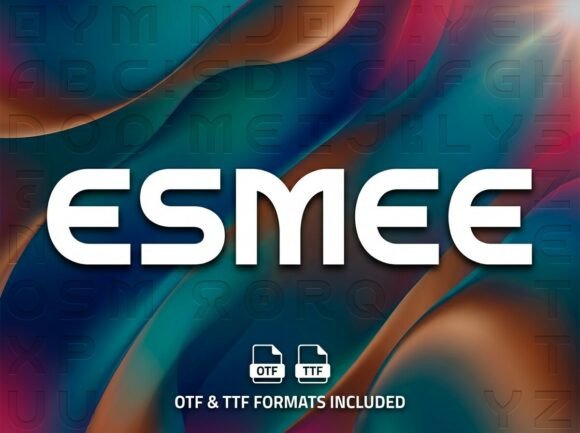
There’s a moment in every branding project when you open that blank canvas and start experimenting with type. I was working on a boutique identity for a local artisanal skincare brand when I first tested Esmee, and from the get-go, it felt like the kind of font that could anchor an entire visual language. As a display font, Esmee isn’t subtle—it’s bold, expressive, and has that rare ability to make text feel like part of the artwork rather than just a message carrier.
Esmee in Logo Design: When Personality Meets Purpose
I tried Esmee on a logo draft for the same skincare brand mentioned above. The client wanted something memorable but still professional enough to convey quality and care. Esmee worked beautifully as the headline font in the logo concept. Its strong visual personality brought warmth and artistry, making the brand feel more personal and handcrafted. However, because it’s a decorative display font, I paired it with a clean sans serif for the tagline—something like Montserrat or Lato—to keep the secondary text legible and balanced. That contrast is key when using Esmee in logo design; it needs a grounded companion to maintain clarity without losing its charm.
Esmee on Brand Boards: Creating Instant Mood
Brand boards are where visual storytelling begins, and Esmee made a big impression there too. When I added it to a mood board alongside watercolor textures and muted pastels, it elevated the overall aesthetic instantly. It wasn’t just another font on the page—it became a central element of the brand’s tone. This is exactly what makes Esmee such a powerful tool for creative designers: it doesn’t just sit there; it contributes to the narrative. If you're looking for a premium font to define your brand’s character, Esmee does that effortlessly.
Esmee in Packaging Mockups: Making Products Pop
Next up was the product packaging mockup. For a small label on a jar of natural balm, Esmee was too much. But when used on a larger sticker for a gift box, it transformed the look. The unique artistic elements gave the package a sense of craftsmanship and luxury. Just be mindful of size constraints—Esmee thrives in larger formats where details can shine. In editorial design or packaging where space allows, it becomes a standout asset. But avoid using it in long body text or tiny footnotes; readability takes a backseat here.
Esmee on Business Cards: A Statement Worth Making
I always test fonts on business cards because they’re a great litmus test for how a typeface holds up at small scale. Esmee didn’t work well as the primary name font, but it did shine when used as an accent for the tagline or a callout phrase like “Handmade with Love.” It adds flair without being overwhelming. Just remember that Esmee is best reserved for short phrases and headlines—especially when printed in smaller sizes. You don’t want to sacrifice legibility for style, even if the font itself is undeniably striking.
Esmee in Social Media Layouts: Eye-Catching and Shareable
Social media is all about capturing attention quickly, and Esmee delivers. I used it in a series of Instagram posts for a handmade jewelry shop, and the results were impressive. The font immediately drew the eye, especially in carousel images where it served as a hero headline. It’s not a webfont, so I had to use it sparingly in digital layouts, mostly as overlay text on images. Still, it helped create a cohesive look across their social feed. If you're designing for platforms like Pinterest or Instagram, Esmee can help your content stand out in a crowded feed.
Esmee on Web Headers: Making First Impressions Count
For website headers, I placed Esmee in the hero section of a homepage mockup for a new bakery. The header read “Esmee Bakery,” and it immediately felt inviting and whimsical. Again, I paired it with a simpler sans serif for navigation and body copy. The contrast between the two created a clear visual hierarchy. While Esmee isn’t suited for full paragraphs or menus, it works wonders as a headline font—especially in niches like food, fashion, or lifestyle brands. Its artistic elements give a modern yet nostalgic feel, which is perfect for websites aiming to express creativity and originality.
Esmee in Print and Digital Posters: Balancing Art and Message
When I designed a poster for a pop-up event, Esmee was the obvious choice for the main title. It brought a sense of occasion and elegance to the design. I also experimented with different weights (if available), though I suspect this display font likely offers only one or two variations. That’s fine for most branding projects since it’s meant to be used boldly. What really impressed me was how it interacted with other design assets—its curves and flourishes complemented botanical illustrations and soft gradients perfectly. But if your poster requires dense information, maybe skip Esmee in favor of a more readable typeface.
Font Pairing Tips: How to Make Esmee Work With Others
If you’re considering Esmee for your next project, pairing it with the right supporting fonts is essential. Here are some combinations I’ve found effective:
- Sans Serif Fonts: Helvetica Neue or Futura for a minimalist and modern contrast.
- Script Fonts: Try pairing it with a lighter script like Great Vibes or Allura for a harmonious yet dynamic look.
- Handwritten Fonts: Works surprisingly well with casual handwritten styles like Pacifico or Alex Brush, especially in craft-based branding.
- Decorative Display Fonts: Be cautious—Esmee is already a strong presence. Stick to one dominant display font per project unless you’re going for maximalist design.
Always test these pairings in context. Typefaces can change dramatically depending on background colors, spacing, and image overlays. Use tools like FontPair or Canva to experiment before finalizing anything for clients.
Commercial Use and Licensing: A Designer’s Responsibility
One thing worth noting is that when using any commercial font, including Esmee, you need to check licensing agreements carefully. Some decorative fonts restrict usage in print-on-demand products or require extended licenses for logos and merchandise. If you're planning to incorporate Esmee into a client’s brand identity system, templates, or digital storefronts, ensure the license covers those uses. It's a small step that can save you from legal hiccups down the line.
When Not to Use Esmee: Practical Limitations
While Esmee is a beautiful decorative display font, it’s not the solution for every problem. Avoid using it in the following situations:
- Long-form text: It’s not built for reading large chunks of content. Use it only for headlines, titles, or short phrases.
- Small sizes: Details get lost when scaled down. It’s better suited for logos, posters, and large headers.
- Formal corporate environments: Unless you're aiming for a very specific retro or luxury aesthetic, Esmee might feel too playful or eccentric for traditional businesses.
That said, for niche markets like wedding invitations, stationery, fashion labels, or indie book covers, Esmee is a perfect fit. It’s the kind of font that says, “This is special,” and if your project deserves that statement, then it belongs in your toolkit.
Final Thoughts on Using Esmee in Real Projects
After testing Esmee across several real-world design scenarios—from brand boards to social media graphics—I’m confident it’s a valuable addition to any designer’s library. It brings a level of sophistication and uniqueness that’s hard to replicate with standard fonts. Just understand its limitations and use it strategically. Think of it as the star of the show, not the narrator. And when it comes to building brand perception, Esmee can do wonders for recognition and engagement, especially in creative industries.
So, if you’re after a display font that commands attention and adds emotional depth to your designs, Esmee is definitely worth a try. Just don’t let it take over the whole project—know when to let it shine and when to step aside.