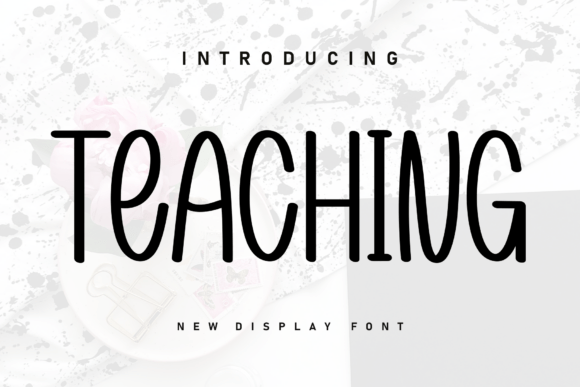
Teaching Font Review: A Display Typeface with Handwritten Clarity
I was recently working on a brand identity for a small creative studio that wanted to convey warmth, authenticity, and professionalism. As I opened up my design software and began building the brand board, I needed a display font that could bridge the gap between casual charm and clean readability. That’s when I stumbled upon Teaching, a new typeface that promises an authentic, human touch through its handwritten clarity. Let me walk you through how it performed across different design applications — from logos to social media graphics.
Using Teaching in Logo Design
In logo drafts, Teaching stood out immediately. Its tall, slightly condensed structure gives it a confident presence without feeling overly formal. I tested it on a few variations of a logo concept for the creative studio, and it worked surprisingly well. The subtle imperfections in each character mimic natural handwriting, which is perfect for brands aiming for a personal, approachable feel.
What impressed me most was how it retained legibility even at smaller sizes. I tried it on a shop sign mockup, and while not ideal for long names or dense text, it looked great as a standalone logo title. For businesses like art schools, tutoring services, or independent publishing houses, this font can add a genuine, educational flair to their visual identity.
Teaching for Branding Projects with a Human Touch
When designing a brand board, I often look for fonts that can set the tone for the entire system. Teaching did exactly that. It brought a sense of warmth and creativity that felt just right for a boutique branding project. I paired it with a minimalist sans serif for body copy and found that the contrast helped emphasize key messaging without overwhelming the viewer.
Its personality is understated but expressive — like a teacher who knows how to keep things interesting without being flashy. This makes it especially appealing for educational projects, such as school websites, learning platforms, or book covers. It also fits well into handmade or craft-based brands, where a personal, artisanal feel is desired.
How Teaching Works in Packaging Mockups
On product packaging, Teaching added a layer of sophistication that’s hard to achieve with standard script fonts. I used it on a label for a line of handcrafted stationery, and the result was both elegant and inviting. The slight condensation gave the text more visual density, which is great for shelf impact and short phrases like taglines or brand names.
However, I noticed that using it for longer descriptions wasn’t effective. It’s best suited for headlines or accent text rather than body copy. If you're working on a packaging design project that needs bold, memorable typography, Teaching can be a strong choice — just make sure to complement it with a more readable supporting font.
Testing Teaching on Business Cards and Print Assets
Business cards are all about first impressions, and Teaching delivered. I applied it to a name field, and the handwritten yet structured style made the card feel personal and professional. It didn’t scream “I’m a designer,” but it quietly hinted at creativity and care — the kind of vibe you want if your brand is about education, community, or craftsmanship.
It also performed well on printed assets like flyers and posters. In one instance, I used it for a flyer promoting a local writing workshop. The title in Teaching caught attention, and the rest of the layout in a complementary sans serif maintained clarity. Just remember that because it's a display font, it should be used sparingly in print work to avoid fatigue in the reader’s eye.
Teaching in Web Design and Social Media Layouts
For web design, I tested Teaching in a homepage hero section. At larger sizes, it added a dynamic feel to the header while maintaining enough structure to feel trustworthy. The slightly condensed width helped it fit better within tight layouts, making it suitable for digital banners or landing page titles.
On Instagram posts, it worked beautifully for short captions and quote graphics. The tall x-height ensures good visibility on mobile screens, and the handwritten nature adds a touch of sincerity. I’d recommend using it for social media graphics where you need something that feels personable but still polished.
Font Pairing Ideas with Teaching
One of the joys of using Teaching is figuring out what works well alongside it. Because it has a soft, open feel, it pairs nicely with modern sans serifs for a balanced, clean aesthetic. For a more classic contrast, I found that pairing it with a sturdy serif font gave the layout depth and authority.
- Sans Serif Pairings: Works well with Helvetica Neue, Futura, or Montserrat for a fresh, contemporary look.
- Serif Pairings: Try it with Georgia or Lora for a warm, academic feel.
- Script/Handwritten Fonts: Avoid clashing by choosing only one handwritten font in your stack; Teaching is expressive enough on its own.
If you're working with multiple Fonts, use Teaching as the headline or subheader, and let another font take over for body text or navigation menus.
Is Teaching Right for Your Project?
Let’s get practical. Teaching is a display font — meaning it shines brightest when used for large-scale typographic elements. It’s not the best option for long paragraphs or fine print. I wouldn’t recommend using it for body text in magazines, blogs, or corporate reports unless it’s part of a very intentional, stylized layout.
That said, it’s excellent for:
- Brand slogans and taglines
- Wedding invitations or event signage
- Creative studios and educational institutions
- Product headers on packaging and labels
- Digital banners and social media headers
Projects that lean too formal or require strict readability might find Teaching too whimsical. But if your brand wants to stand out with a unique, thoughtful typeface, it could be just the thing.
Exploring Variations and Commercial Use
While I didn’t have access to alternate styles or weights during my test (the core Display version was sufficient), I would love to see it offered in a few additional variants. The current iteration includes some nice ligatures and basic multilingual support, which is helpful for international clients or niche audiences.
As always, before using Teaching in any commercial context — whether it's for brand identity, merchandise, or a website — double-check the licensing terms. Make sure it allows use in print-on-demand products, digital ads, and other revenue-generating assets if that's part of your plan.
Practical Tips for Testing Teaching Before Committing
Before recommending Teaching to a client or locking it into a final project, I suggest testing it in several real-world scenarios. Here’s what I did:
- Applied it to a full-size logo mockup and checked how it scaled down to business card size.
- Placed it next to potential competitors like Playfair Display or Great Vibes to assess uniqueness.
- Used it on both dark and light backgrounds to evaluate contrast performance.
- Tested it in both uppercase and mixed case to see which reads better in different contexts.
This process helps ensure that Teaching isn’t just visually appealing, but also functional for the specific needs of your Fonts-driven design work.
Final Thoughts on Teaching for Creative Branding
After putting Teaching through the paces — from logo drafts to social media layouts — I can confidently say it’s a versatile and expressive typeface that brings an authentic, human touch to the table. Whether you’re crafting an identity for a local café, refreshing a skincare brand’s visual language, or designing materials for an online course platform, Teaching offers a balance of elegance and approachability that’s rare to find.
It doesn’t demand attention like a wild decorative font, nor does it fade into the background like a generic sans serif. Instead, it speaks softly but clearly, making it a solid addition to your Fonts toolkit for creative projects where personality matters. Just remember to pair it thoughtfully and use it strategically for maximum impact.
If you're looking for a premium font that bridges the gap between handwritten warmth and professional clarity, give Teaching a try. You might just find it’s the missing piece in your next branding puzzle.