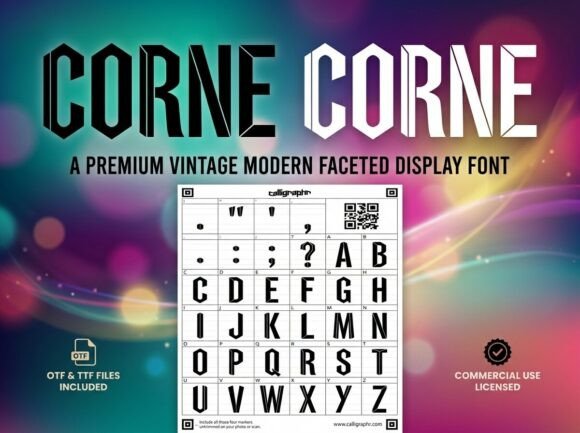
Corne Typeface for Editorial Elegance
I was deep into redesigning the header of a new lifestyle blog when I first came across Corne, a display font that immediately caught my eye. It wasn’t just its sharp, architectural lines or the subtle vintage warmth it carried—it was the way it felt like it belonged in every layout I imagined. Corne is one of those premium fonts that doesn’t shout but commands attention with its refined presence. As a blogger and editorial designer, I knew this typeface had potential to elevate not just headers, but entire design systems.
Corne in Blog Headers and Article Titles
Blog headers are the first impression readers get, and I’ve always believed they should be memorable. When I tested Corne on a sample blog post title, the contrast between its faceted edges and the softer body text was striking yet harmonious. The tall, open letterforms give a sense of clarity even at smaller sizes, which is crucial for mobile readability. For article titles, especially in minimalist layouts, Corne adds a touch of sophistication without being overpowering. Its modern precision makes it feel fresh, while the hint of vintage charm gives it a timeless quality—perfect for content that blends contemporary insights with classic storytelling.
Corne for Magazine Covers and Newsletter Graphics
One of the more exciting applications I tried was using Corne on a digital magazine cover mockup. The font’s geometric structure paired beautifully with abstract shapes and photography, creating an editorial identity that felt both bold and elegant. In newsletter graphics, where you want to stand out from the clutter, Corne worked wonders. Whether it was the headline of a weekly update or a section opener in a monthly publication, it added visual weight and interest without sacrificing legibility.
Creating Visual Hierarchy with Corne
In editorial design, hierarchy is everything. With Corne, I found it easy to guide the reader’s eye through a page. Its clean, structured form works best for headlines and pull quotes, where it can anchor the design and draw attention. For body copy, I’d recommend sticking to a readable serif or sans serif font, but using Corne sparingly for emphasis can really help break up dense blocks of text and maintain reader engagement.
Corne in Wedding Guides and Lifestyle Publications
While working on a wedding guide layout, I wanted something that felt luxurious but not overly ornate. Corne fit the bill perfectly. Its tall, co features gave the headings a sense of grandeur, and the subtle character nuances helped differentiate sections like “ceremony,” “attire,” and “receptions.” In a lifestyle blog redesign, I used it for feature titles and chapter openers, giving the site a curated, high-end look that aligned with the brand’s voice. It’s a great choice for any project that needs a bit of typographic flair without losing approachability.
Font Pairings That Work with Corne
Display fonts often shine brightest when balanced with simpler supporting styles. For Corne, I recommend pairing it with a clean sans serif for captions and navigation, or a warm, soft serif for body text. This combination allows the font to take center stage while ensuring the rest of your layout remains functional and easy to read. I tested it with Georgia for a printable planner and with Lato for a course PDF—both combinations worked well, letting Corne carry the personality while the other fonts provided clarity and consistency.
Corne for Ebook Titles and Branding Projects
When designing an ebook cover for a recipe collection, I needed something that would pop on both screen and print. Corne delivered exactly that. The tall, co characteristics made the title stand out against background textures and imagery, and the font’s crispness ensured it remained clear at various zoom levels. Beyond covers, I also used Corne in the branding assets for the same project—social media posts, worksheet templates, and downloadable printables all benefited from its architectural elegance. It helped create a cohesive visual language that resonated with the audience and reinforced the book’s professional yet personal tone.
Readability Across Formats
Though Corne is a display font, I was impressed by how adaptable it was across different formats. On screen reading, especially in newsletters and web pages, it maintained its sharpness and didn’t pixelate when scaled down. For long-form content, it’s better suited to section headings than full paragraphs, but in that role, it supports the rhythm of the layout and keeps the reader moving smoothly from one idea to the next. When exported as a PDF or printed as part of a planner, the font retained its fine details and structural integrity—an important consideration for creators who value cross-platform consistency.
Using Corne in Chapter Openers and Decorative Accents
I’ve been experimenting with Corne in chapter openers for a coaching workbook, and it’s become one of my favorite tools for creating visual momentum. The faceted nature of the typeface adds a dynamic edge to otherwise static layouts, making each new section feel intentional and impactful. For decorative accents—like small taglines or corner highlights—Corne brings just the right amount of texture and intrigue. It’s not a font you want to overuse, but in the right spots, it can add layers of depth and style to your design.
Designing with Purpose: Why Corne Fits the Bill
What makes Corne particularly appealing is how it balances form and function. Unlike some display fonts that prioritize aesthetics over usability, Corne feels designed with real-world publishing in mind. Its rhythm and spacing make it feel deliberate, which is essential when crafting layouts that need to be both beautiful and practical. Whether you’re building a digital magazine or setting up a printable planner, Corne helps you craft a publication that feels polished and purposeful.
Corne for Content Creators and Digital Product Designers
As someone who frequently creates digital products—from course PDFs to paid newsletters—I appreciate how Corne adapts to different contexts. In a recent redesign of a client’s newsletter template, I used Corne for the main headline and a lighter sans serif for the subheadings. The result was a layout that felt both modern and trustworthy, two qualities that matter greatly in editorial design. It also played well in social media banners and promotional graphics, adding a distinctive touch that set the brand apart from competitors.
Checking Font Styles and Licensing Before Launch
Before finalizing any project with Corne, I always check the included styles, alternates, and ligatures to ensure it meets the layout’s needs. The font offers enough variation to support multiple use cases within a single publication, and its multilingual support is a welcome bonus for international audiences. File formats are typically robust, and if you're planning to use it commercially—for ebooks, templates, or paid newsletters—licensing terms are usually straightforward. Always confirm the specifics before distribution, especially if you're integrating it into design assets for clients or commercial platforms.
Corne in Print and Web: A Balanced Approach
One of the joys of working with Corne is seeing how it behaves in both print and web environments. In a test print run for a printable planner, the font held up beautifully under pressure—no blurring or distortion, just clean, precise lines. Online, it rendered clearly across devices, maintaining its architectural appeal whether viewed on a phone or desktop. This kind of versatility is rare among display fonts, making Corne a smart choice for projects that span both mediums.
Building Consistency with Corne in Brand Identity
Consistency is key in brand identity, and Corne has proven to be a reliable tool in achieving that. From logo design to website headers and packaging design, it maintains a uniform voice that strengthens recognition. I recently helped a client rebrand their digital newsletter and chose Corne for the masthead and section dividers. The result was a publication that felt both authoritative and inviting—a balance that’s hard to achieve but essential for long-term engagement.
Corne for Pull Quotes and Feature Pages
On a recent editorial feature page for a wellness blog, I used Corne for pull quotes and highlighted sections. The font’s unique shape allowed me to emphasize key phrases without overwhelming the surrounding content. It’s particularly effective in layouts where you want to highlight a quote or statistic—its structure draws the eye naturally, encouraging readers to pause and reflect. In this context, Corne isn’t just a font; it’s a narrative device that enhances the flow of information and emotional impact.
A Thoughtful Addition to Any Editor’s Toolkit
Choosing the right font can transform a good layout into a great one. Corne is more than a display font; it’s a design statement. Whether you’re working on a blog, an ebook, a printable guide, or a digital magazine, Corne brings a level of typographic refinement that elevates the whole experience. Its blend of vintage charm and modern precision makes it a standout in today’s crowded design landscape, and as a creator, I can say with confidence that it deserves a place in your next project.